The Ision Fortress
Ision Kalesi
/ By Josh
Cost: Free
Great for: Hellenistic Architecture, Ancient Greece, People Who Love Getting Their Legs Scratched by Thorns
Set in the low hills above the Beymelek Lagoon is the rather unusual Ision fortress, easy to spot with its pale limestone masonry among the green scrub-covered slopes. In a region full of impressive Greco-Roman city ruins, this lone tower stands out for its comparatively small size and odd design.
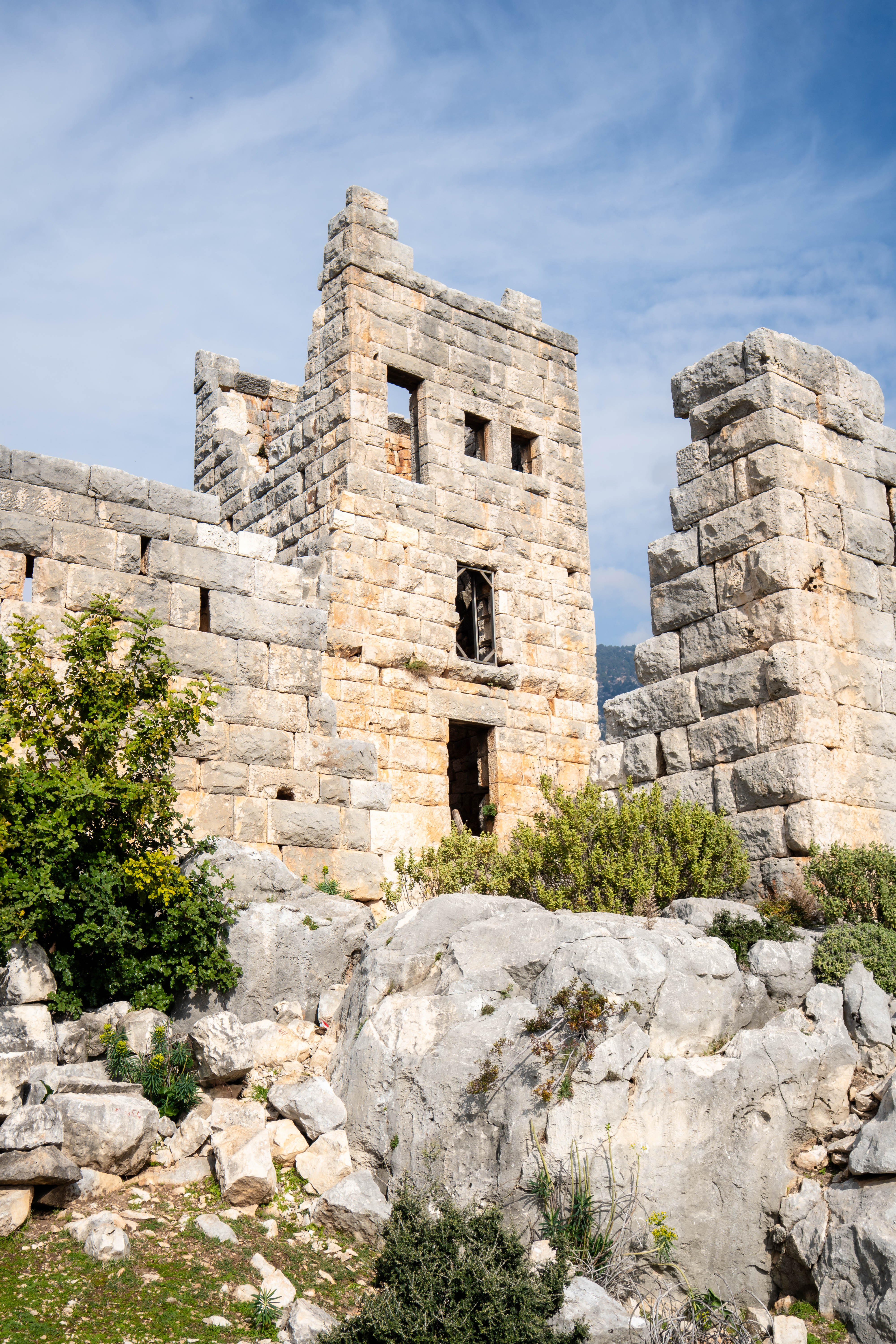
Little is known about the fortress from historical accounts apart from a brief mention in the Stadiasmus Maris Magni, a 3rd century guide to ports and coastal settlements for sailors in the Mediterranean which mentions “a tower called the Ision” between Myra and the Limyrus.
In 1842, an expedition by British explorers Sprott, Forbes, and Daniell remarked on this tower, noting the difficulties they faced in trying to reach it on foot from the coast. They mention boulder strewn hills and thick thorn bushes that made the trek difficult. Not much has changed as the tumbled boulders and thorns are still very much present, though the modern explorer must also figure out how to get around the vast greenhouses that often block the way.
Subscribe to The Art of Wayfaring
Believed to have been built some time between 250 and 200 BC, the Ision Fortress has survived remarkably well with the majority of the masonry still standing, apart from a couple of the outer walls. The fort consisted of two primary towers awkwardly joined together by a narrow, covered building topped with a high walkway on one side and an open courtyard. Adding to the oddness of the layout the courtyard structure is five sided like a rectangle with one corner cut off. The upper floors of the towers are now lost due to their being made of wood, though the courses of corbeled moulding that supported the wood structure are still visible.
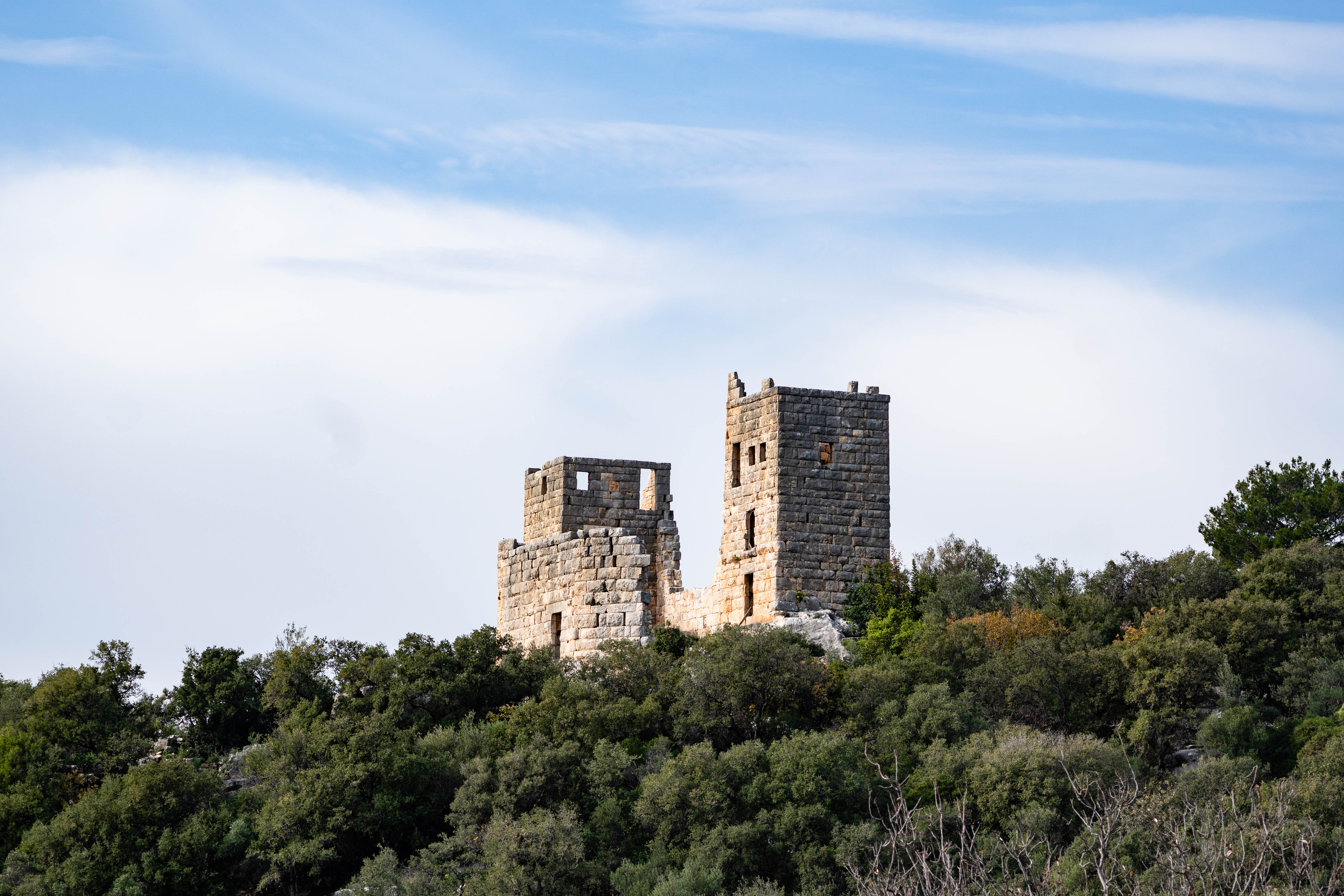
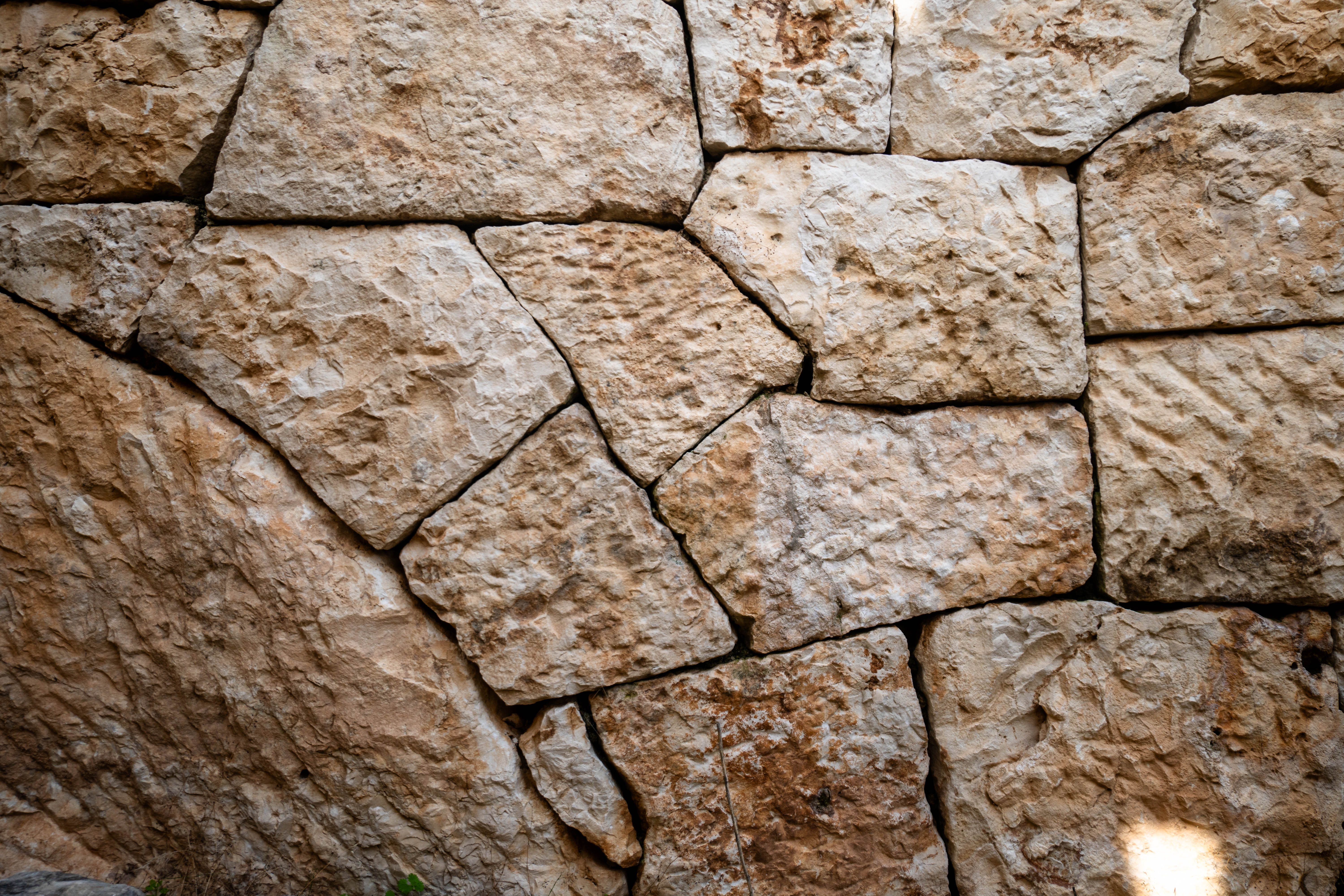
The construction of the fortress is of high quality. While the stones are not overly large like many other Hellenistic buildings of this period, the stones are worked to be well-fitted which has allowed it to remain standing for the past two millennia. The exterior facing is constructed with regular rectangular blocks while the interior stones are of irregular shaped stones chipped to fit tight.
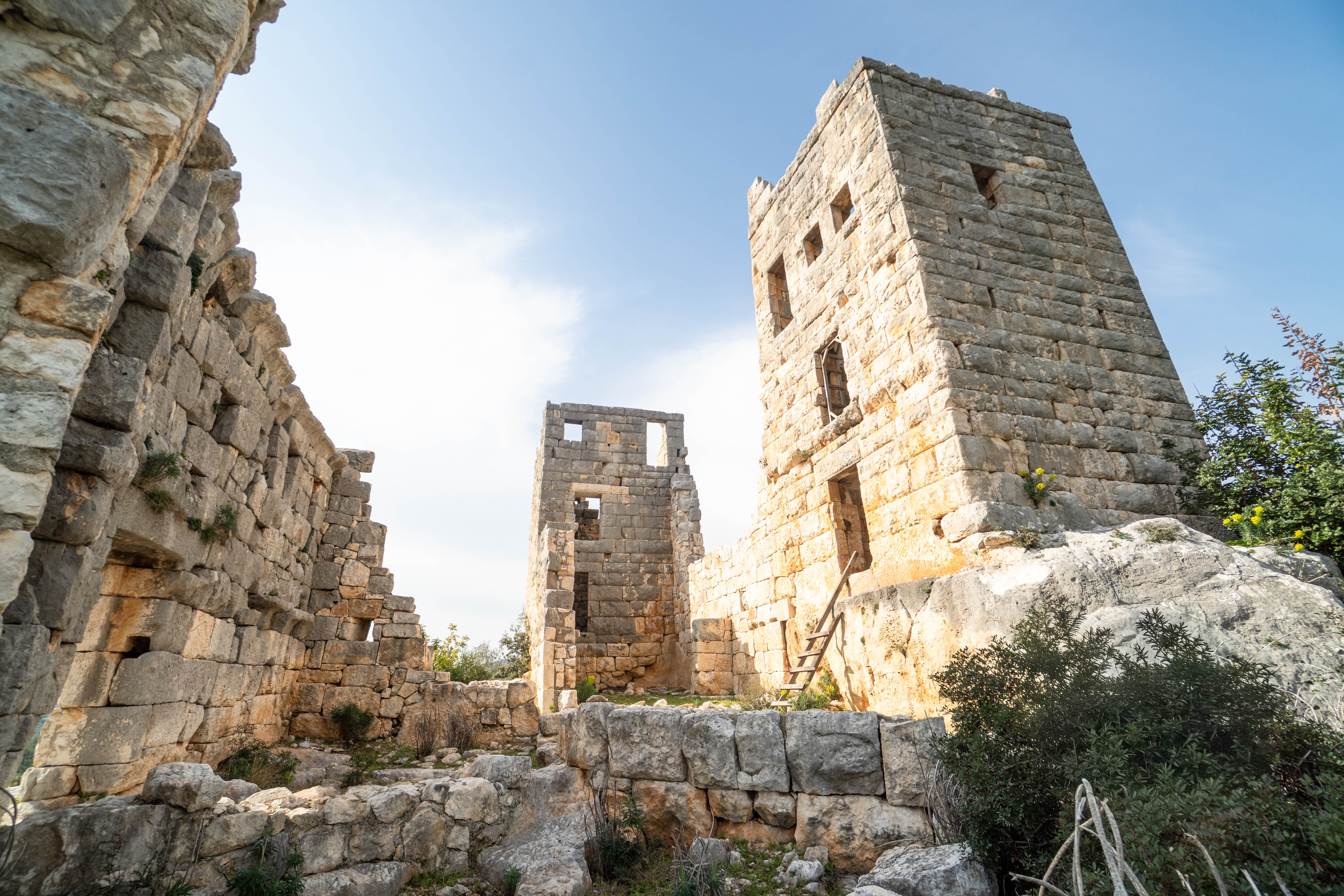
While it may not be obvious when visiting today, the Ision Fortress is actually fairly close to the ancient city of Myra and it’s likely that it was constructed to act as a forward watchtower over the stretch of coast to the east of the city.
How To Get There
car/taxi
The Ision Fortress is easy to see from the D400 highway just east of Demre which makes reaching the ruin much easier. The roads are a mess here apparently taken out by the rising creek and disorganized excavation so you may need to make a detour or two to reach your destination.
Arriving from the east along the D400 highway, turn right onto Iskele Street, follow this through the village of Beymelek then turn left back downhill onto what is probably Kızılalan street. You’ll pass the fortress on your right then turn right up the gravel road that leads to the tower.
If you’re coming from Demre, then exit the town via Kızılalan street and head up the hill till you see the fortress on your left. Again, the roads here are a mess and so you may need to improvise.
For more about car rental and driving in Turkey make sure to read our full drivers guide.
Taxi
If you’re already visiting Santa Clause in the town of Demre and don’t have your own car then the Ision Tower is within taxi range.
Where To Stay
The Ision Fortress is in the Turkish Riviera and there is an endless list of accommodation options ranging from glamping (glamour camping), bungalows in orange orchards, five-star resorts, and everything else. The Town of Demre (just over the hill) has a decent list of places to choose from both in town and on the beach.
Other Tips
Planning on visiting the Ision Fortress? Make sure to visit neighbouring Demre with the ruins of Myra and the church of St Nicholas.
Subscribe to The Art of Wayfaring
Have any tips or info to add? Spot any mistakes? We’d love to hear about it.